The woman behind the crown
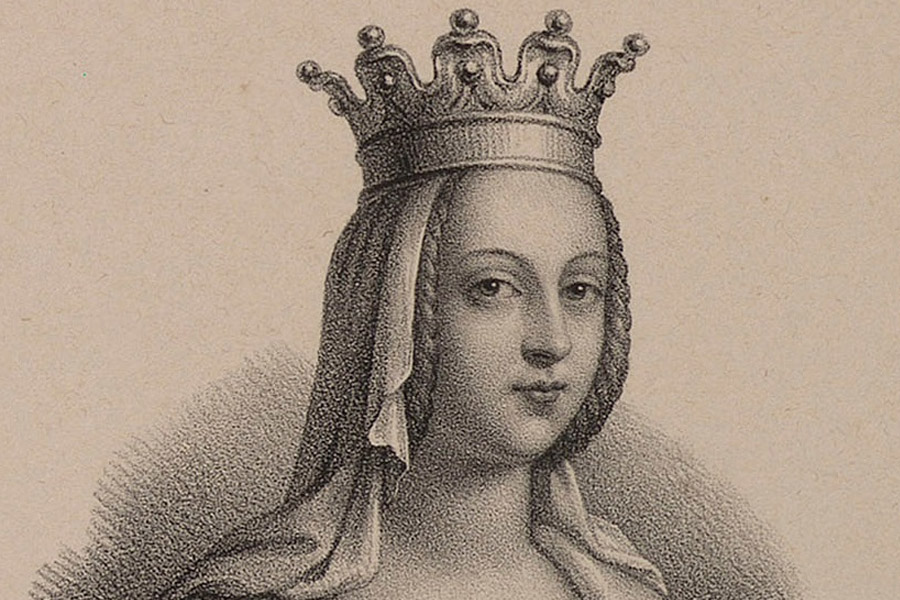
I picture Hildegard Of The Vinzgau as a figure standing at the hinge of history, where family loyalty, royal politics, and sacred patronage all pressed together like iron in a forge. She was born around 757 or 758 into an aristocratic Frankish and Alemannian world, and she died on 30 April 783 at Thionville. In a life that seems brief by modern standards, she moved through one of the most powerful courts in early medieval Europe and became one of the central women of the Carolingian age.
Her name is tied to Charlemagne, but that only explains part of her story. I see her as a queen, a mother, and a political bridge between noble houses. Her marriage to Charlemagne did not merely join two people. It tied together lineages, territories, and ambitions. Her life moved like a river feeding many channels, and those channels became the future of Europe.
Her origins and noble household
Hildegard came from a distinguished family. Her father is generally identified as Gerold of Anglachgau, and her mother as Imma of Alemannia. That background mattered. In the Frankish world, bloodline was not decorative. It was political capital. A marriage could stabilize a realm, strengthen alliances, and give a ruler access to loyal supporters in key regions.
I find it striking that later traditions and genealogies sometimes vary on details, especially around place names and family links, but the central truth remains clear. Hildegard belonged to a high-ranking noble household. She was not a woman lifted from obscurity. She entered the royal stage already carrying the weight of elite birth, and that weight gave her presence at court.
Her family links also reached outward into later generations and older traditions. Some genealogical reconstructions connect her to brothers whose names appear in different forms, including Eric of Friuli, Gerold, Megingoz, Udalrich, and Odo. These sibling lists are less certain than her core parentage, yet they show how deeply her family was woven into the aristocratic fabric of the age.
Marriage to Charlemagne and life at court
Hildegard married Charlemagne about 771 or 772, after Carloman I’s death transferred power. After that, she was no longer a private wife. She was Frankish queen and Lombard queen after Charlemagne’s 774 conquest.
I imagine her court life as a multi-door chamber. She performed ceremony and ritual as a consort. She participated in politics through others. She co-signed charters and supported religious institutions. That suggests she was public, not just domestic. Hildegard stands out in an age when women were typically shrouded by male rulers.
Charlemagne lived by campaigns, diplomacy, and movement. Hildegard moved. She lived in the orbit of imperial expansion, formed by her husband’s turbulent rule.
Children of Hildegard Of The Vinzgau
Her most enduring legacy lies in her children. I cannot overstate how important this family was. Through them, Hildegard became an ancestor of rulers who shaped the next century of Frankish history.
The best-attested list gives her nine children with Charlemagne:
| Child | Notes |
|---|---|
| Charles the Younger | Eldest surviving son, later a royal figure in his own right |
| Adalhaid | Died in infancy |
| Rotrude | Linked in later plans to Byzantine imperial diplomacy |
| Pepin of Italy | Also known as Carloman before taking the name Pepin |
| Louis the Pious | Future emperor and one of the most important Carolingians |
| Lothair | Died young |
| Bertha | Known in later tradition for her relationship with Angilbert |
| Gisela | Known but sparsely documented |
| Hildegard | Youngest child, died in infancy |
Charles the Younger represented dynastic continuity. Pepin of Italy extended Carolingian rule southward. Louis the Pious became emperor and carried the family line into a new phase of history. Bertha, Gisela, and the younger Hildegard remind me that not every royal child survives into major political fame, yet each one formed part of the dynasty’s living structure.
The two infant deaths, Adalhaid and the younger Hildegard, and the early death of Lothair also reveal the fragility of royal life. A crown could gleam like gold, but the household beneath it was vulnerable to birth, illness, and mortality.
Grandchildren and the widening Carolingian tree
Hildegard’s family significance expands dramatically through Louis the Pious. That son became the father of another generation of famous rulers, including Charles the Bald, Louis the German, and Lothair I. In other words, Hildegard stands near the root of a great Carolingian tree whose branches later covered much of Western Europe.
I find this part of her story almost architectural. She is not just a name in a family record. She is a load bearing beam. Through her son, her descendants shaped politics in Francia, Italy, and the lands that would later be divided among Carolingian heirs. Her grandchildren made the family name even larger, but her position at the start of that chain gives her a special gravity.
Patronage, piety, and achievement
Hildegard’s achievements were not the kind recorded in battle chronicles, because her power worked in a quieter register. She supported monasteries, made donations, and helped shape royal religious culture. She is associated with the rebuilding and endowment of the Abbey of Kempten and with gifts to the Abbey of Saint Arnulf in Metz. She also appears in connection with the Godescalc Evangelistary, a magnificent manuscript that reflects the artistic and spiritual wealth of the Carolingian court.
I see her patronage as a lamp in a dim hall. It did not announce itself with thunder, but it illuminated the world around her. Monastic foundations and liturgical books were not minor ornaments. They were instruments of memory, devotion, and legitimacy. By supporting them, Hildegard helped turn royal power into something sacred and enduring.
Her death in 783, likely connected to childbirth, came early. Yet even in that short span, she left marks that outlasted her. Her burial at Metz and the later traditions surrounding her memory show how royal women could move from living authority into remembered sanctity.
The family members around Hildegard
I must view Hildegard and her surroundings as a single map to understand her.
Her father, Gerold of Anglachgau, is a noble who established Frankish supremacy in area aristocracy. She came from his political base.
Mother Imma of Alemannia links Hildegard to Alemannian nobility. Imma connects Hildegard to Frankish and Alemannian cultures.
Her royal spouse Charlemagne dominates her existence. He dominated her public life, but he wasn’t everything. Their union formed a royal family with reproduction, rule, patronage, and legitimacy.
The oldest surviving son, Charles the Younger, symbolized continuance.
Although she died early, Adalhaid was the first of several children born into the tension of campaign, travel, and authority.
Since her life affected foreign alliances, Rotrude shows diplomatic desire.
Pepin of Italy showed how the Carolingians ruled multiple kingdoms.
Louis the Pious was the main dynastic heir. His familial inheritance became imperial history.
Lothair, Bertha, Gisela, and the younger Hildegard complete the household, reminding me that dynasties are comprised of full families living under strain, ritual, and grief.
FAQ
Who was Hildegard Of The Vinzgau?
Hildegard Of The Vinzgau was a Frankish queen, the wife of Charlemagne, and one of the most important women of the Carolingian age. She was also a patron of monasteries and the mother of several influential children, including Louis the Pious.
Who were her parents?
Her father is generally identified as Gerold of Anglachgau, and her mother as Imma of Alemannia. These links place her in a powerful aristocratic network before her marriage to Charlemagne.
How many children did she have?
She is usually credited with nine children by Charlemagne. Among them were Charles the Younger, Pepin of Italy, Louis the Pious, Bertha, Gisela, and the younger Hildegard.
Why is Hildegard Of The Vinzgau historically important?
She mattered because she connected noble families, strengthened Charlemagne’s court, and became the mother of Louis the Pious. Through her descendants, she stands near the heart of later Carolingian history.
What did she achieve during her life?
Her achievements were political, dynastic, and religious. She served as queen, participated in court life, co-signed charters, supported monasteries, and helped shape the cultural and spiritual identity of the royal household.
When did she die?
She died on 30 April 783 at Thionville. Her life ended early, but her family line and patronage left a long shadow across medieval Europe.